- 0
- 0
I think we can all agree that errors happen. Even to the best of us. In fact, I can’t adequately describe the tiny, shameful thrill that zips through me when I spot a typo in a book by a Very Important, Much-Awarded Author. It’s like catching a unicorn with spinach in its teeth. Suddenly the literary gods descend from Mount Perfection and join the rest of us mortals in the land of “oops.”
Which is why I have absolutely no emotional fragility about being corrected as a writer. None. Zero. I am correction-friendly. Correction-embracing. Correction-curious, even. My dear editor—who is far kinder about my errors than I deserve—always approaches them like she’s delivering tragic news. “I’m so sorry, there’s just one tiny thing …” Meanwhile I’m over here saying, “Oh good, what did I mangle this time? Show me the carnage.”
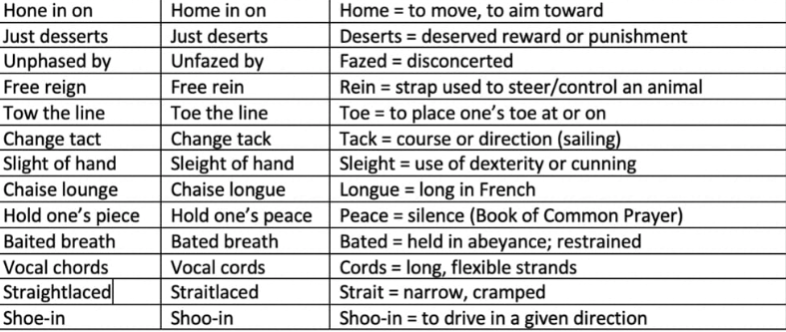
Because truly, I do try to get it right. I aim for polished prose. But the English language is basically a carnival funhouse designed by pranksters with PhDs. Words that sound identical mean wildly different things. Spellings wander off like unsupervised toddlers. And then there are those sneaky word twins that look totally innocent—until you realize you told readers you plan to reign in your enthusiasm. (It’s actually rein, like horse reins.) And now my brain has left the building and gone to lie down.
So, when my editor and I recently discussed this whole “nobody is perfect” situation, I did what any reasonable word nerd would do: I dove headfirst into a rabbit hole of commonly confused words. Hours later I emerged, blinking, delighted, and clutching a list that made my logophile heart sing. Turns out we are all wandering through linguistic booby traps on a daily basis. The table above? Proof that English is 40% history, 40% chaos, and 20% people guessing confidently.
Truly, knowing that someone will eventually come along and gently point out the tiny things I’ve missed doesn’t make me defensive. It makes me grateful. It means the words matter enough to check. It means someone is paying attention. And most importantly, it means I can continue my lifelong hobby of being spectacularly, enthusiastically human on the page.
So yes, correct away, dear editor. Hone, rein, tack, straight, and shoe-in me into grammatical respectability whenever necessary. I’ll be over here celebrating the comforting truth that perfection is overrated … and that somewhere, right now, a Pulitzer winner has probably just typed “vocal cords” as “chords.”